
Among the 11 equity sub-categories, thematic funds received the highest net inflows at Rs 9,017 crore, followed by smallcap funds at Rs 5,721 crore and flexicap funds at Rs 5,698 crore.

'Stay disciplined, and remain invested.' 'Volatile times are the best to invest in structural opportunities at the right price.'

'The market's sharp decline recently has shaken the confidence of retail investors, leading to increased selling.'

The race to acquire diversified fintech firm Religare Enterprise Limited (REL) intensified as Dabur group promoters, the Burman family, said it was going ahead with the open offer on Monday and claimed that the counter offer made by US-based businessman Digvijay Gaekwad wasn't valid and will not stand scrutiny of market regulator Sebi. The Burman family claimed that the competing offer falls outside the 15-day window stipulated by the Sebi takeover code, following their initial offer on October 4th, 2023.

The Securities and Exchange Board of India (Sebi) on Thursday debarred Pacheli Industrial Finance and six others entities from the markets in its bid to crack down on a "pump and dump" case, substantiated by a probe into Rs 850 crore preferential allotment and examination of alerts around price movement of the firm's stock.

'The shifts in US involvement in global conflicts and geopolitical alliances could introduce uncertainties.'

Net flows from domestic institutional investors crossed Rs 5 trillion for the first time during a calendar year.

The Securities and Exchange Board of India (Sebi) on Thursday debarred Ketan Parekh, the stock market operator involved in the stock market scam of 2000, Singapore-based trader Rohit Salgaocar, and one other individual from the securities market for alleged front-running of trades of a United States (US)-based foreign portfolio investor (FPI). The FPI manages around $2.5 trillion worth of funds globally.

In 2024, the Securities and Exchange Board of India (Sebi) implemented significant reforms, focusing on cooling down the derivatives segment, enhancing transparency and accountability in small and midsised enterprise (SME) listings, and deepening the fund management ecosystem.

The derivatives trading volume has seen a 37 per cent month-on-month decline in December following a slew of measures undertaken by the market regulator Securities Exchange Board of India (Sebi) to curb the frenzy in the derivatives segment. The average daily turnover (ADTV) for the derivatives segment (notional turnover for options segment) so far this month is at Rs 280 trillion - the lowest since June 2023-compared to Rs 442 trillion in November.

Metropolitan Stock Exchange of India (MSE) plans to raise Rs 120 crore from investors in an attempt to stay afloat. The beleaguered exchange's board has approved issuance of 1.19 billion equity shares of face value Rs 1 at a premium of Rs 1 through private placements, according to a disclosure on its website.

Zomato on Monday became the first new-age company to join the prestigious 30-share benchmark Sensex, replacing JSW Steel. This milestone marks a significant achievement not only for Zomato but also for the Indian startup ecosystem, which is increasingly making its presence felt in the $5.2 trillion listed ecosystem.
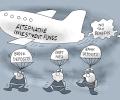
Around Rs 1 trillion, or a fifth of the investments made by alternative investment funds (AIFs) are questionable in terms of the intent behind the investments and are under the scanner for circumvention of regulations, said Ananth Narayan, whole-time member of Securities and Exchange Board of India (Sebi). AIFs are pooled investment vehicles that invest in a variety of assets including real estate, startups, unlisted companies, and derivative strategies in the listed space.

'There has been a spurt of algo platforms, and algo developers, which are neither empaneled nor regulated, but are still active in the ecosystem.'

Of the total 199 small and medium enterprises (SMEs) listed this year so far, 22 had an issue size of less than Rs 10 crore, which the Securities and Exchange Board of India (Sebi) will no longer allow in the listed ecosystem after its recent consultation paper. The market regulator on Tuesday proposed an overhaul of the rules governing the initial public offerings (IPOs) of SMEs and corporate governance norms for listed SMEs, following concerns over 'systemic risk' seen in the ecosystem with instances of fund diversion and price manipulation.
Alternative investment funds (AIFs) have crossed Rs 5 trillion in terms of funds raised, while the investment commitments have surpassed Rs 12 trillion for the first time as of September, according to data released by the Securities and Exchange Board of India (Sebi).
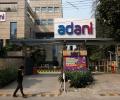
Though a settlement will provide respite from a long legal battle, legal experts say it may create a perception of guilt.

Among the new entries, the largest by market capitalisation are LIC, Avenue Supermarts (DMart), Adani Green Energy, Zomato and Jio Financial Services.

China has stayed on top for two consecutive months in the MSCI Emerging Markets Investable Market Index (EM IMI), after ceding the position to India in August. At the end of October, China's weight in the key EM gauge stood at 24.72 per cent, up from 21.58 per cent at the end of August. India's weight during this period has slipped to 20.42 per cent from 22.27 per cent.

On the cusp of launching its Rs 11,327 crore initial public offering (IPO) next week, food and grocery delivery major Swiggy believes quick commerce to be its future growth engine and anticipates that it will outpace its core food delivery business over the next five years. Currently, the quick commerce business of Swiggy - backed by Prosus and SoftBank - is 40 per cent of the size of its food delivery revenues.
 © 2026 Rediff.com - Advertise with us - Disclaimer - Privacy Policy - Sitemap - Feedback - About us - Terms of use - Grievances